Article Archives
- April 2026
- October 2025
- September 2025
- July 2025
- June 2025
- February 2025
- December 2024
- October 2024
- June 2024
- March 2024
- December 2023
- November 2023
- August 2023
- May 2023
- February 2023
- November 2022
- October 2022
- September 2022
- August 2022
- July 2022
- June 2022
- May 2022
- April 2022
- March 2022
- February 2022
- January 2022
- December 2021
- November 2021
- October 2021
- September 2021
- August 2021
- July 2021
- June 2021
- May 2021
- April 2021
- March 2021
- February 2021
- January 2021
- December 2020
- November 2020
- October 2020
- September 2020
- August 2020
- July 2020
- June 2020
- May 2020
- April 2020
- March 2020
- February 2020
- January 2020
- December 2019
- November 2019
- October 2019
- September 2019
- August 2019
- July 2019
- June 2019
- May 2019
- April 2019
- March 2019
- February 2019
- January 2019
- December 2018
- November 2018
- October 2018
- September 2018
- August 2018
- July 2018
- June 2018
- May 2018
- April 2018
- March 2018
- February 2018
- January 2018
- December 2017
- November 2017
- October 2017
- September 2017
- August 2017
- July 2017
- June 2017
- May 2017
- April 2017
- March 2017
- February 2017
- January 2017
- December 2016
- November 2016
- October 2016
- September 2016
- August 2016
- July 2016
- June 2016
- May 2016
- April 2016
- March 2016
- February 2016
- January 2016
- December 2015
- November 2015
- October 2015
- September 2015
- August 2015
- July 2015
- June 2015
- May 2015
- April 2015
- March 2015
- February 2015
- January 2015
- December 2014
- November 2014
- October 2014
- September 2014
- August 2014
- July 2014
- June 2014
- May 2014
- April 2014
- March 2014
- February 2014
- January 2014
- December 2013
- November 0019
- All Current Articles
Article Categories
- Announcement
- ASCE National
- ASCE Texas Section
- Awards
- Continuing Education
- E-Week
- Education Outreach
- Ethics Seminar
- Girl Scouts
- Institute Seminar
- Keynote Session
- Meeting Host
- Meeting Summary
- Membership Update
- President's Message
- Scholarships
- Technical Session
- Texas Section
- Volunteering
- Webinar
- Younger Members
- All Current Articles
Articles
CE Club March 2018 Update
Materials Engineering with Wiss, Janey, Elstner Associates
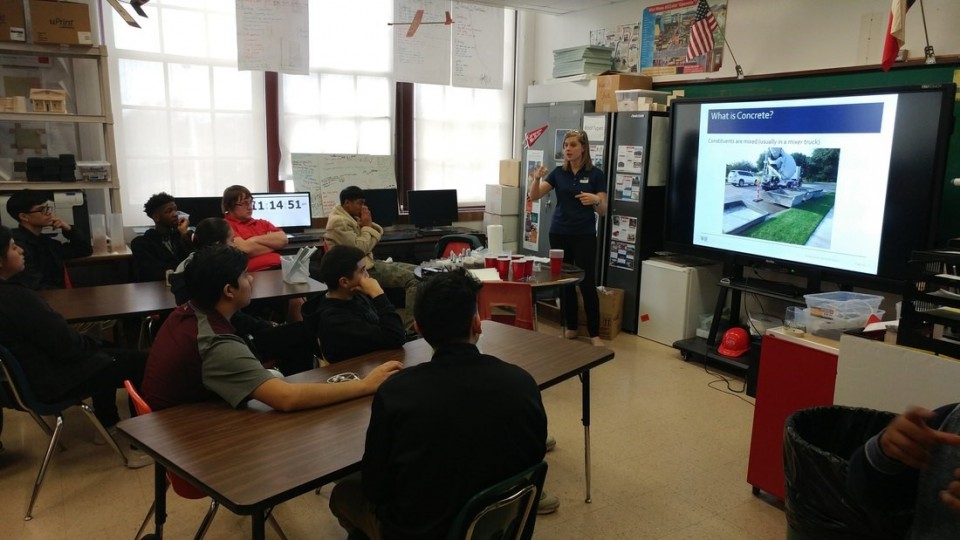
Kaitlin Forke and Doug Smith of WJE presented to the Woodrow Wilson High School CE  Club.The presentation was a brief overview of concrete including the basic constituents (with specific focus on Portland cement and chemical admixtures), the batching process, and field placement and testing. The presentation included an activity that highlighted the effects of chemical admixtures, specifically super plasticizers and viscosity modifying admixtures (VMAs), on the rheology of a concrete mix. During the activity, each student mixed Portland cement and water in a small container. After seeing how difficult it was to mix just the cement and water, they added a few drops of super plasticizer and were able to see a drastic improvement in workability. However, when they placed a
  few aggregates in the mix (small pebbles), all the aggregate sank to the bottom. Next they added a few drops of VMA to their mixes and didn’t see any drastic changes in workability. However, when they placed aggregates in the mix, the aggregate stayed on top initially and could be evenly distributed by mixing.
Additional photos can be found online here.
Structural Engineering with L.A. Fuess Partners
Phillip Pesek of L.A. Fuess Partners gave the CE Club students at Woodrow Wilson H igh School and overview of structural engineering just in time for Mr. Carver to start covering the structures cirriculum in their classroom. Students were challenged to consider the structures that are all around them: from buildings and bridges to even things like cars, airplanes, and roller coasters.
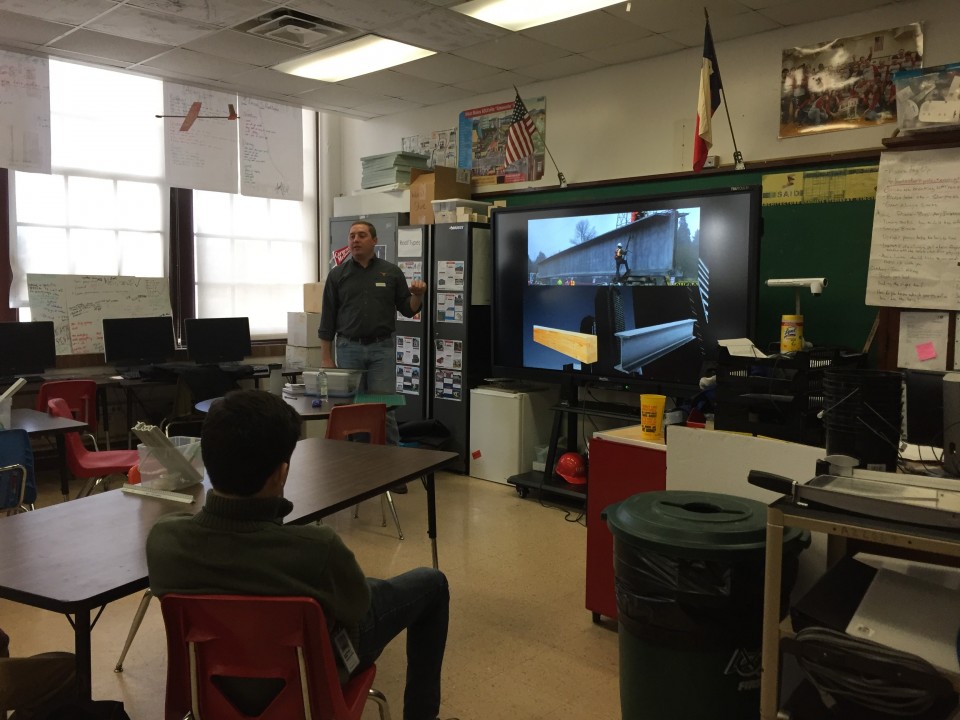
Phil then took the students through the basics of the engineering design process of analysis, design, and iteration. He explained how engineers analyze and predict loads, material properties, and architectural needs to then design structural elements like slabs, beams, columns, foundations, and lateral elements.
Finally, Phil explained how structural engineers have to design for both strength AND serviceability. To illustrate this process, he presented the students with a simply supported beam problem and had the students work out both strength and deflection equations with varying material properties.
Earthquake Engineering with L.A. Fuess Partners
Steven Blair and Nick Prather, engineers from L.A. Fuess Partners, capped off the second of two presentations by the Uptown Dallas structural engineering firm. Steven opened the presentation up with a brief overview of different lateral force resistance systems, including: braced frames, shear walls, and moment frames. The students were also taught the strength of triangles when it comes to braced frame design.
 Next, Nick went over the design challenge: building earthquake-resistant structures out of marshmallows, gum drops, and spaghetti sticks. The marshmallows simulated "pinned" connections, while the gum drops simulated "fixed" or moment connections. The students were also given design criteria with regards to footprint size, minimum number of stories, and story height. Once the students had built their spaghetti stick structures, Nick and Steven tested them on shake tables with varying intensity and orientations. Lateral force resisting elements in each structure were then broken slowly and the students were asked to guess how building performance would be impacted.
Additional photos from this activity can be found online here.
Civil Engineering Students from SMU
Several students from the ASCE SMU Student Chapter kicked off the new Civil Engineering Club at Hillcrest High School with a presentation on what a college civil engineering program looks like. The SMU students shared a lot about the college application and scholarship process and how the engineering school at SMU functions. The SMU students also showcased all the different career options that are possible with a degree in civil engineering including examples of major civil engineering projects that most of the students recognized.
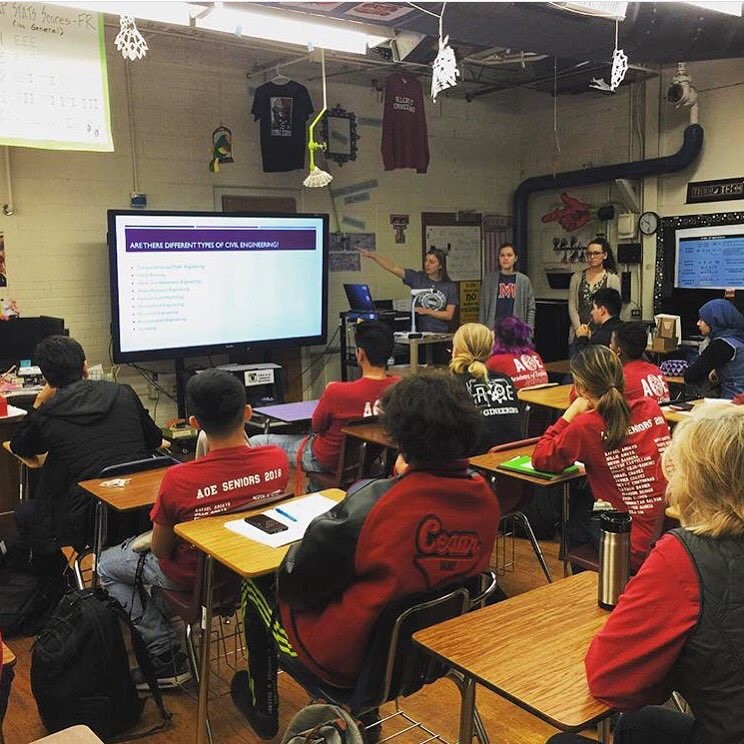
The SMU students also went into detail on their senior design projects. The high school students from Hillcrest High School especially enjoyed getting to ask specific questions about the unique challenges and experiences of studying civil engineering in college.
Construction Engineering with L.A. Fuess Partners
Jonathan Brower of L.A. Fuess Partners presented to the Hillcrest HS CE Club on how his job as a structural engineer not only involves structural design using math and physics but also large amounts of time on coordination and administrative duties with architects and contractors. All this communication must be done in a formal and professional manner while dealing with others that are just as busy with other concerns, priorities, and projects.
To help illustrate this challenge, the students were given different packets of pictures of LEGO buildings made from a variety of LEGO blocks of different colors and sizes. The LEGO blocks to each building were given to one of the other groups in the room. Each team of students had to then figure out the most efficient way to communicate how to build their LEGO building using only pencil and paper. Each team was responsible for producing a set of design drawings for a building as well as constructing a LEGO building from the design drawings of another team. The teams could ask questions back and forth with the other design or construction teams they were working with, but everything had to be communicated “officially” on paper, meaning no talking between teams was allowed.
Students gained a special appreciation for the coordination and multitasking that being an engineer requires as they began to receive construction documents for building a LEGO structure while they were receiving questions and RFIs from the team that had their construction documents.
