
Article Archives
- April 2026
- October 2025
- September 2025
- July 2025
- June 2025
- February 2025
- December 2024
- October 2024
- June 2024
- March 2024
- December 2023
- November 2023
- August 2023
- May 2023
- February 2023
- November 2022
- October 2022
- September 2022
- August 2022
- July 2022
- June 2022
- May 2022
- April 2022
- March 2022
- February 2022
- January 2022
- December 2021
- November 2021
- October 2021
- September 2021
- August 2021
- July 2021
- June 2021
- May 2021
- April 2021
- March 2021
- February 2021
- January 2021
- December 2020
- November 2020
- October 2020
- September 2020
- August 2020
- July 2020
- June 2020
- May 2020
- April 2020
- March 2020
- February 2020
- January 2020
- December 2019
- November 2019
- October 2019
- September 2019
- August 2019
- July 2019
- June 2019
- May 2019
- April 2019
- March 2019
- February 2019
- January 2019
- December 2018
- November 2018
- October 2018
- September 2018
- August 2018
- July 2018
- June 2018
- May 2018
- April 2018
- March 2018
- February 2018
- January 2018
- December 2017
- November 2017
- October 2017
- September 2017
- August 2017
- July 2017
- June 2017
- May 2017
- April 2017
- March 2017
- February 2017
- January 2017
- December 2016
- November 2016
- October 2016
- September 2016
- August 2016
- July 2016
- June 2016
- May 2016
- April 2016
- March 2016
- February 2016
- January 2016
- December 2015
- November 2015
- October 2015
- September 2015
- August 2015
- July 2015
- June 2015
- May 2015
- April 2015
- March 2015
- February 2015
- January 2015
- December 2014
- November 2014
- October 2014
- September 2014
- August 2014
- July 2014
- June 2014
- May 2014
- April 2014
- March 2014
- February 2014
- January 2014
- December 2013
- November 0019
- All Current Articles
Article Categories
- Announcement
- ASCE National
- ASCE Texas Section
- Awards
- Continuing Education
- E-Week
- Education Outreach
- Ethics Seminar
- Girl Scouts
- Institute Seminar
- Keynote Session
- Meeting Host
- Meeting Summary
- Membership Update
- President's Message
- Scholarships
- Technical Session
- Texas Section
- Volunteering
- Webinar
- Younger Members
- All Current Articles
Articles
Main Speaker - May 2017
Underground Freight Mobility
Presented By:
Dr. Mohammad Najafi, Ph.D., P.E., F. ASCE
Anyone who has driven on I-35 toward Austin and San Antonio or I-45 toward Houston can vouch for the large amount of truck traffic on these routes. By 2030, the number of trucks carrying NAFTA goods will increase by an estimated 263 percent and the number of rail units will grow by 195 percent. In the Port of Houston, larger ships with higher capacities will arrive due to the expansion of the Panama Canal. It's unlikely the existing highway system can safely and economically handle these increases.
Professor Najafi thinks there's another, better way. He's investigating underground freight transportation, a class of unmanned systems in which capsules designed to carry standard shipping containers travel through pipelines between large freight terminals.
In this presentation, Dr. Najafi examines the feasibility of employing a variety of underground freight mobility technologies and the problems associated with selecting design components such as routes (using existing right-of-way of highways, especially of interstate highways), tunneling methods (open-cut and tunnel boring machine), the vehicles (capsules and gondolas), the conveyance system (tracks and power systems), and the terminal design and intermodal load transfer systems.
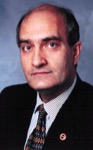
Dr. Mohammad Najafi, Ph.D., P.E., F. ASCE earned a B.S. in Civil Engineering from Texas Tech University, an M.S. from Purdue University and a doctorate from Louisiana Tech University. He worked in the construction industry for more than 12 years before returning to Louisiana Tech to become the program manager of the university's Trenchless Technology Center. Professor Najafi then joined Michigan State University, serving as the director of its Center for Underground Infrastructure Research and Education before coming to UT Arlington in 2007.
Dr. Najafi’s research interests are in the area of pipelines and underground infrastructure systems construction, renewal and management, with utilization of innovative methods, and trenchless technology. His research has been published widely in technical journals and professional and trade conferences. He is the author of four books, more than 100 papers, and 12 ASCE Manuals on trenchless technology, asset management, and pipeline design. He is the founder and Editor-in-Chief of the ASCE Journal of Pipeline Systems Engineering and Practice.
