Article Archives
- April 2026
- October 2025
- September 2025
- July 2025
- June 2025
- February 2025
- December 2024
- October 2024
- June 2024
- March 2024
- December 2023
- November 2023
- August 2023
- May 2023
- February 2023
- November 2022
- October 2022
- September 2022
- August 2022
- July 2022
- June 2022
- May 2022
- April 2022
- March 2022
- February 2022
- January 2022
- December 2021
- November 2021
- October 2021
- September 2021
- August 2021
- July 2021
- June 2021
- May 2021
- April 2021
- March 2021
- February 2021
- January 2021
- December 2020
- November 2020
- October 2020
- September 2020
- August 2020
- July 2020
- June 2020
- May 2020
- April 2020
- March 2020
- February 2020
- January 2020
- December 2019
- November 2019
- October 2019
- September 2019
- August 2019
- July 2019
- June 2019
- May 2019
- April 2019
- March 2019
- February 2019
- January 2019
- December 2018
- November 2018
- October 2018
- September 2018
- August 2018
- July 2018
- June 2018
- May 2018
- April 2018
- March 2018
- February 2018
- January 2018
- December 2017
- November 2017
- October 2017
- September 2017
- August 2017
- July 2017
- June 2017
- May 2017
- April 2017
- March 2017
- February 2017
- January 2017
- December 2016
- November 2016
- October 2016
- September 2016
- August 2016
- July 2016
- June 2016
- May 2016
- April 2016
- March 2016
- February 2016
- January 2016
- December 2015
- November 2015
- October 2015
- September 2015
- August 2015
- July 2015
- June 2015
- May 2015
- April 2015
- March 2015
- February 2015
- January 2015
- December 2014
- November 2014
- October 2014
- September 2014
- August 2014
- July 2014
- June 2014
- May 2014
- April 2014
- March 2014
- February 2014
- January 2014
- December 2013
- November 0019
- All Current Articles
Article Categories
- Announcement
- ASCE National
- ASCE Texas Section
- Awards
- Continuing Education
- E-Week
- Education Outreach
- Ethics Seminar
- Girl Scouts
- Institute Seminar
- Keynote Session
- Meeting Host
- Meeting Summary
- Membership Update
- President's Message
- Scholarships
- Technical Session
- Texas Section
- Volunteering
- Webinar
- Younger Members
- All Current Articles
Articles
Main Speaker - March 2016
“What About the Recent Earthquakes in Our Backyard?”
Presented by:
Brian Stump, Ph.D.
Albritton Chair of Geological Sciences
Southern Methodist University
This talk is intended to give an overview of the types of activities that can induce or trigger earthquakes. This topic has become of increasing interest, particularly in the DFW area, as communities have experienced small to moderate earthquakes in areas where there have not been historic events. The lack of historic events does not mean that an area does not have a natural earthquake hazard and associated risk as the recurrence time between events can be long. On the other hand, in many areas the increases in seismicity are concurrent with activities that involve either the removal or addition of fluids to the subsurface. This linkage between earthquakes and fluids has been noted for many years and suggests that there may indeed be a physical basis for the relationship. The talk is structured to provide some overview materials that set the historical background of the issue. I will follow with a summary of the earthquake sequences in the Fort Worth Basin. Summary ideas will be presented that illustrates necessary steps forward in order to further understand the causes of these earthquakes that may or may not be associated with fluid disposal or removal.
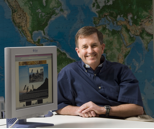
Brian Stump received his B.A. from Linfield College (1974), his M.A. and Ph.D. from University of California, Berkeley (1975, 1979), where he held a UC Regents Intern Fellowship. Immediately following his graduate education he spent 4 years on active duty with the US Air Force as a staff seismologist and ultimately as Chief of the Geological Siting and Seismology Section. He joined the faculty of Department of Geological Sciences at Southern Methodist University in 1983 and now holds the Albritton Chair of Geological Sciences. He served as Department Chair from 1991-1993.
Continuity of teaching and research activities at SMU was interrupted from 1994 to1997 when he joined the technical staff of the Los Alamos National Laboratory where he was program manager of the Nuclear Test Monitoring Group and participated in the negotiations for the Comprehensive Nuclear Test Ban Treaty in Geneva, Switzerland, as a scientific advisor for the Department of Energy. He was a member of the team that received the Los Alamos National Laboratory Outstanding Performer Small Group Award in 1996.
He enjoys teaching at both the graduate and undergraduate levels including an introductory course in geology that views the earth from the perspective of earthquakes and volcanoes and an interdisciplinary course that focuses on the impact of science and technology on society with emphasis on nuclear issues. Stump was the 2004 Dedman Family Distinguished Professor and in 2006 was awarded the Phi Beta Kappa Perrine Prize for outstanding teaching and scholarship.
Brian’s research focuses on the utilization of waves in the atmosphere and the solid earth as tools for assessing both the material through which the waves propagate as well as the characteristics of the source that generates the waves and has led to in excess of 100 contributions. His initial work focusing on seismic waveforms from nuclear explosions found application in identification, location and yield determination and motivated his contribution to the test ban treaty negotiations. He and his graduate students have had a continuously, well-funded research program for over 25 years. He also contributes in this area as the Chair of the Department of Defense Seismic Review Panel.
Recent work in collaboration with the Korean Institute of Geosciences and Mineral Resources has focused on the acquisition and utilization of combined data sets of seismic and low frequency acoustic (infrasound) data for characterization of events at or near the solid earth atmosphere boundary. He and his research group have designed, constructed and now operate a set of innovative seismo-acoustic laboratories that provide observations from man-made events such as mining and construction explosions, as well as natural events such as earthquakes and bolides. Additional work over the last five years has focused on the role of fluids and earthquake triggering.
Outside professional activities have included a three-year term on the board of directors for the Incorporated Research Institutions of Seismology (IRIS), a university consortium of over 100 US universities and over 100 foreign affiliates that is dedicated to exploring the Earth’s interior through the collection and distribution of seismographic data. IRIS cooperates closely with NSF and other federal agencies and private foundations in its role as operator of the Global Seismic Network, the PASSCAL instrumentation center, a global data management system and USArray, a continent sized seismic instrumentation program contributing to the characterization of the crust and upper mantle of North America. In 2015 he was elected as a fellow of the American Association for the Advancement of Science for work in nuclear explosion monitoring.
