Article Archives
- April 2026
- October 2025
- September 2025
- July 2025
- June 2025
- February 2025
- December 2024
- October 2024
- June 2024
- March 2024
- December 2023
- November 2023
- August 2023
- May 2023
- February 2023
- November 2022
- October 2022
- September 2022
- August 2022
- July 2022
- June 2022
- May 2022
- April 2022
- March 2022
- February 2022
- January 2022
- December 2021
- November 2021
- October 2021
- September 2021
- August 2021
- July 2021
- June 2021
- May 2021
- April 2021
- March 2021
- February 2021
- January 2021
- December 2020
- November 2020
- October 2020
- September 2020
- August 2020
- July 2020
- June 2020
- May 2020
- April 2020
- March 2020
- February 2020
- January 2020
- December 2019
- November 2019
- October 2019
- September 2019
- August 2019
- July 2019
- June 2019
- May 2019
- April 2019
- March 2019
- February 2019
- January 2019
- December 2018
- November 2018
- October 2018
- September 2018
- August 2018
- July 2018
- June 2018
- May 2018
- April 2018
- March 2018
- February 2018
- January 2018
- December 2017
- November 2017
- October 2017
- September 2017
- August 2017
- July 2017
- June 2017
- May 2017
- April 2017
- March 2017
- February 2017
- January 2017
- December 2016
- November 2016
- October 2016
- September 2016
- August 2016
- July 2016
- June 2016
- May 2016
- April 2016
- March 2016
- February 2016
- January 2016
- December 2015
- November 2015
- October 2015
- September 2015
- August 2015
- July 2015
- June 2015
- May 2015
- April 2015
- March 2015
- February 2015
- January 2015
- December 2014
- November 2014
- October 2014
- September 2014
- August 2014
- July 2014
- June 2014
- May 2014
- April 2014
- March 2014
- February 2014
- January 2014
- December 2013
- November 0019
- All Current Articles
Article Categories
- Announcement
- ASCE National
- ASCE Texas Section
- Awards
- Continuing Education
- E-Week
- Education Outreach
- Ethics Seminar
- Girl Scouts
- Institute Seminar
- Keynote Session
- Meeting Host
- Meeting Summary
- Membership Update
- President's Message
- Scholarships
- Technical Session
- Texas Section
- Volunteering
- Webinar
- Younger Members
- All Current Articles
Articles
CE Club December 2015 Update
Structural Field Engineer from HILTI

Alexis Clark, the ASCE Dallas Younger Member Chair, came to share her career as a structural field engineer for Hilti with the CE Club. She started off by explaining her path through high school and college as well as the important skills she acquired before and after her start with Hilti. Alexis explained how manufacturers, sales, and consultants fit into the design and construction processes, and that engineers aren’t pigeon-holed into cubicle-restrained design careers.
 After giving an introduction to Hilti and the opportunities for growth and development within the company, she briefly discussed firestop and deck fastening products and passed around samples of both to the students. Next, Alexis challenged the students to think like a technical consultant, understand that there can be multiple solutions to a problem, and that asking questions is key to being an engineer by leading them through an anchor design problem.
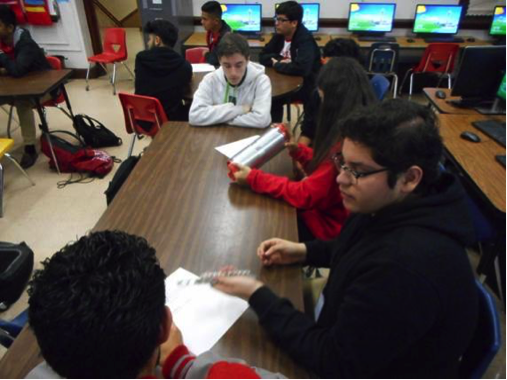
The students’ “problem” was given in the form of an email from a “client” needing an anchor for a base plate connection complete with geometric constraints and design loads. The class was then divided into six groups and were assigned one of three anchor solutions (adhesive, screw, and wedge anchors) to defend. There were two groups defending each of the three anchor types to show that although a team may have to defend the same product, they may use different reasons in their justification. Alexis explained to the class the three anchor types, the mechanisms by which they distribute loads, and briefly touched on installation positives and negatives. At the end of the teamwork time, each team was called up to defend their solution and the class could openly discuss why different designs and alternatives were considered.
Core Volunteer from Habitat for Humanity
 Ashlyn Kelbly, a Core Volunteer for Dallas Habitat for Humanity, presented to the students at Woodrow Wilson on the inner-workings of the organization. Ashlyn explained how interested families can apply to become Habitat for Humanity homeowners and how Habitat is not simply “giving away” houses. The organization is primarily targeting families earning somewhere between 25%-60% of the area median income and requires the families to go through home ownership and mortgage classes in addition to putting “sweat equity” (or volunteered build hours) into their home.
The students were then shown a couple of the six floor plans that Dallas Habitat for Humanity has available for the homes. There is also a variety of façade options for the houses, which is primarily the result of requests from the Dallas City Council to add some diversity to the Habitat for Humanity houses popping up in various neighborhoods.
 Ashlyn then asked the students to list off what they thought some of steps to building a home might be. Students mentioned important things such as: lot size, soil conditions, surrounding area, trees, and wildlife. Ashlyn also explained how Habitat for Humanity has to do their due diligence to check the zoning requirements, flood plain status, access to public water utilities, and access to fire hydrants for the prospective house locations. All of these are things that civil engineers do on a daily basis, and it was great for the students to see how all these requirements and processes tie together to complete a project, even for something as simple as a single family residence. Habitat for Humanity will then subcontract out a geotechnical engineer for a soils report, a foundation engineer for the stiffened slab foundation, and a work crew to construct and install the plumbing and foundation. After all this has been done, the house site is ready for volunteers to begin the wood framed house construction process. Ashlyn showed pictures of all these steps and certainly built plenty of excitement for those going out to the build day the following Saturday.
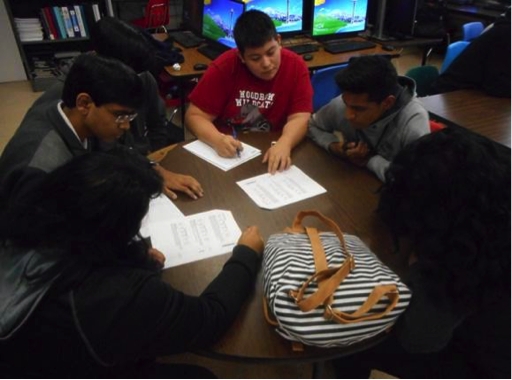
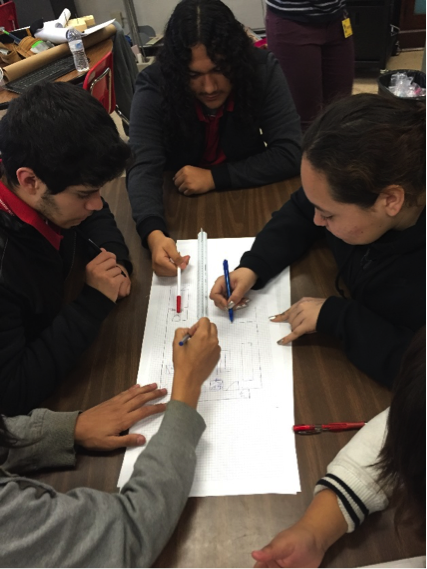
Finally, the students were broken out into four teams and given a blank site map to develop a house floor plan. Each team was given a different key objective:
-
Open floor plan -
Architecturally interesting -
Maximize square footage -
Easy to build
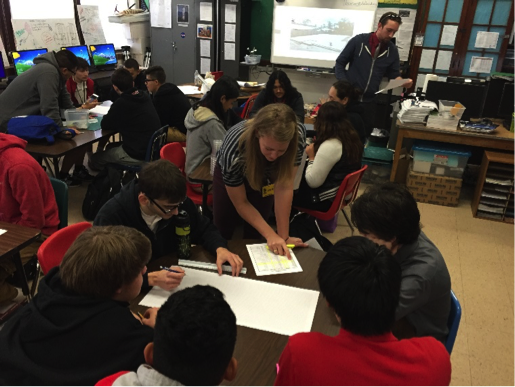
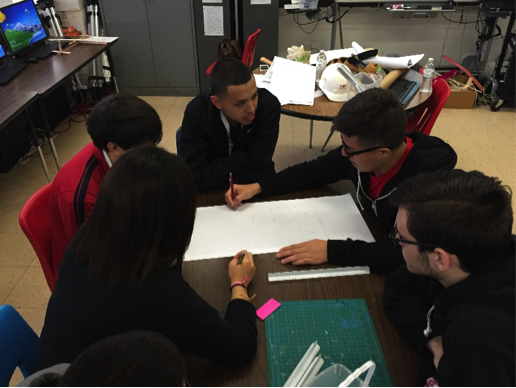
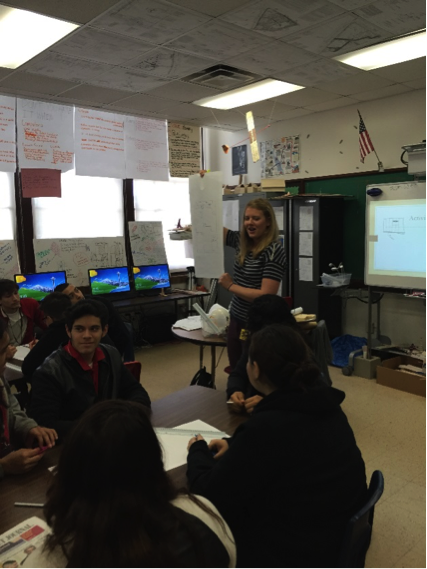
Each team then presented their floor plan to the class and defended their design based on their designated key objective. A special emphasis was made once again on how their can often be many solutions to a single problem when it comes to engineering.
Habitat for Humanity Build Day
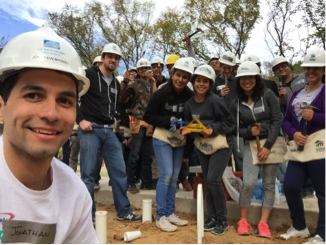
Twenty students, their teacher Mr. Carver, and the ASCE Dallas CE Club Champion, Jonathan Brower, had the opportunity to volunteer on a Saturday build day at a Habitat for Humanity work site. The group was fortunate enough to be working on a framing day at a house site in the Joppa neighborhood of south Dallas. This meant that they arrived at the site where there was nothing but a foundation slab and a stack of pre-fabricated stud walls from the Dallas Area Habitat for Humanity Wall Shop.

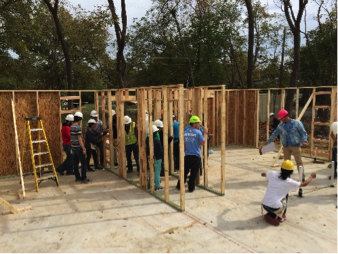
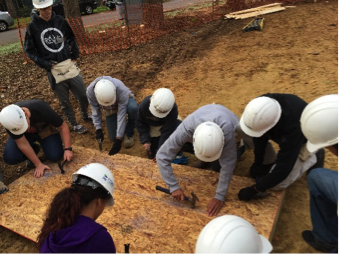
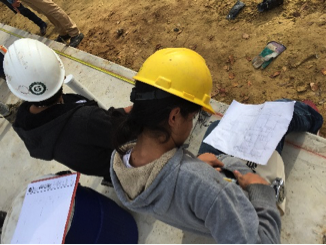
Students immediately got to work in the morning chalking the slab with wall lines, nailing OSB sheathing to the exterior walls, and learning to use power tools. Before long, groups of students were setting, leveling, and using a nail gun to attaching the stud walls to the house foundation. Students also learned some more of the basic, yet essential, parts of residential wood construction such as water proofing and the importance of setting straight and level walls to produce a safe and appealing home for the homeowners.
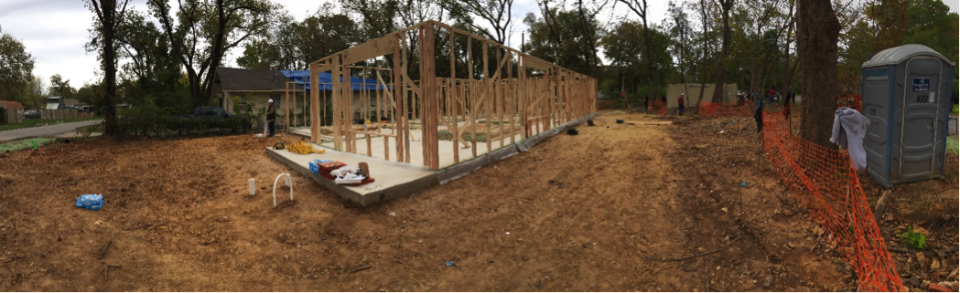
A special thanks to Ashlyn Kelbly, a Dallas Area Habitat for Humanity Core Volunteer and ASCE Dallas member, for coordinating this build day. Additional photos from the build day can be found here.