Article Archives
- April 2026
- October 2025
- September 2025
- July 2025
- June 2025
- February 2025
- December 2024
- October 2024
- June 2024
- March 2024
- December 2023
- November 2023
- August 2023
- May 2023
- February 2023
- November 2022
- October 2022
- September 2022
- August 2022
- July 2022
- June 2022
- May 2022
- April 2022
- March 2022
- February 2022
- January 2022
- December 2021
- November 2021
- October 2021
- September 2021
- August 2021
- July 2021
- June 2021
- May 2021
- April 2021
- March 2021
- February 2021
- January 2021
- December 2020
- November 2020
- October 2020
- September 2020
- August 2020
- July 2020
- June 2020
- May 2020
- April 2020
- March 2020
- February 2020
- January 2020
- December 2019
- November 2019
- October 2019
- September 2019
- August 2019
- July 2019
- June 2019
- May 2019
- April 2019
- March 2019
- February 2019
- January 2019
- December 2018
- November 2018
- October 2018
- September 2018
- August 2018
- July 2018
- June 2018
- May 2018
- April 2018
- March 2018
- February 2018
- January 2018
- December 2017
- November 2017
- October 2017
- September 2017
- August 2017
- July 2017
- June 2017
- May 2017
- April 2017
- March 2017
- February 2017
- January 2017
- December 2016
- November 2016
- October 2016
- September 2016
- August 2016
- July 2016
- June 2016
- May 2016
- April 2016
- March 2016
- February 2016
- January 2016
- December 2015
- November 2015
- October 2015
- September 2015
- August 2015
- July 2015
- June 2015
- May 2015
- April 2015
- March 2015
- February 2015
- January 2015
- December 2014
- November 2014
- October 2014
- September 2014
- August 2014
- July 2014
- June 2014
- May 2014
- April 2014
- March 2014
- February 2014
- January 2014
- December 2013
- November 0019
- All Current Articles
Article Categories
- Announcement
- ASCE National
- ASCE Texas Section
- Awards
- Continuing Education
- E-Week
- Education Outreach
- Ethics Seminar
- Girl Scouts
- Institute Seminar
- Keynote Session
- Meeting Host
- Meeting Summary
- Membership Update
- President's Message
- Scholarships
- Technical Session
- Texas Section
- Volunteering
- Webinar
- Younger Members
- All Current Articles
Articles
Hillcrest High School End 2018-2019 Update
Hillcrest HS Civil Engineering Club 2018-2019
After going through a semester-long pilot program in the spring of 2018, the ASCE Dallas Branch decided to move forward with a full expansion of the Civil Engineering Club Program to Hillcrest High School for the 2018-2019 school year. With a full, four-year Engineering Academy, Hillcrest High School has a very similar set up to Woodrow Wilson High School, the location of the extremely successful CE Club Program that earned the ASCE Dallas Branch the 2019 CRYMC Outstanding Younger Member Group Project Award.
The Hillcrest Engineering Academy utilizes a Project Lead the Way curriculum and is led by Diane Combs, a registered professional engineer in the state of Texas, that formerly worked in private consulting and for the City of Dallas. The ASCE Dallas Branch was extremely excited to work with a civil engineer that had transitioned into education and Hillcrest High School presented a great central location within Dallas to draw in many great speakers from the industry. Much like the Woodrow Wilson CE Club, the Hillcrest CE Club meetings occurred during the teacher’s class periods. The professionals that would come into the classroom to speak would essentially serve as a substitute teacher for the day. This enhanced the class curriculum and showed students how the concepts they were learning in class could be applied in the real world.
You can check out some of the amazing things going on in this classroom by following their program on Instagram at @hillcrestaoe!
Southern Methodist University ASCE Student Chapter
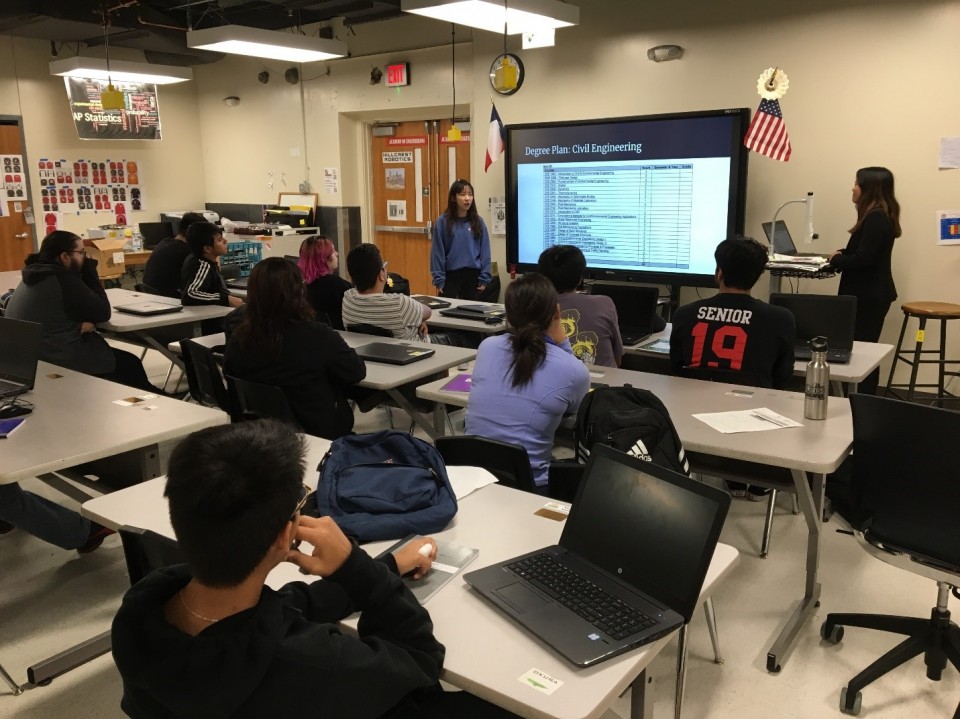
Ola Wenno and Sharon Yang of the SMU ASCE Student Chapter kicked off the year at the new ASCE Dallas Civil Engineering Club at Hillcrest High School. They started off by outlining the degree plan of a civil engineering major including the major decisions that students must make as they work through their degree plan. They also focused on sharing a couple of senior design projects: the WEAT Competition and the full-semester Carollo Project.
Ola and Sharon also explained the first-year design project that freshman engineers are put to work on. This project involved the students being assigned to a multi-disciplinary team to build a bridge, sensors, and an autonomous robot – a great way to illustrate real-world teamwork! The Hillcrest students were very interested to learn what could be in their very near future as a college engineering student. The presentation closed with a question and answer session where the high school students could ask candid questions about SMU, the college application process, and life as a college student.
Water Resources Engineering with AECOM
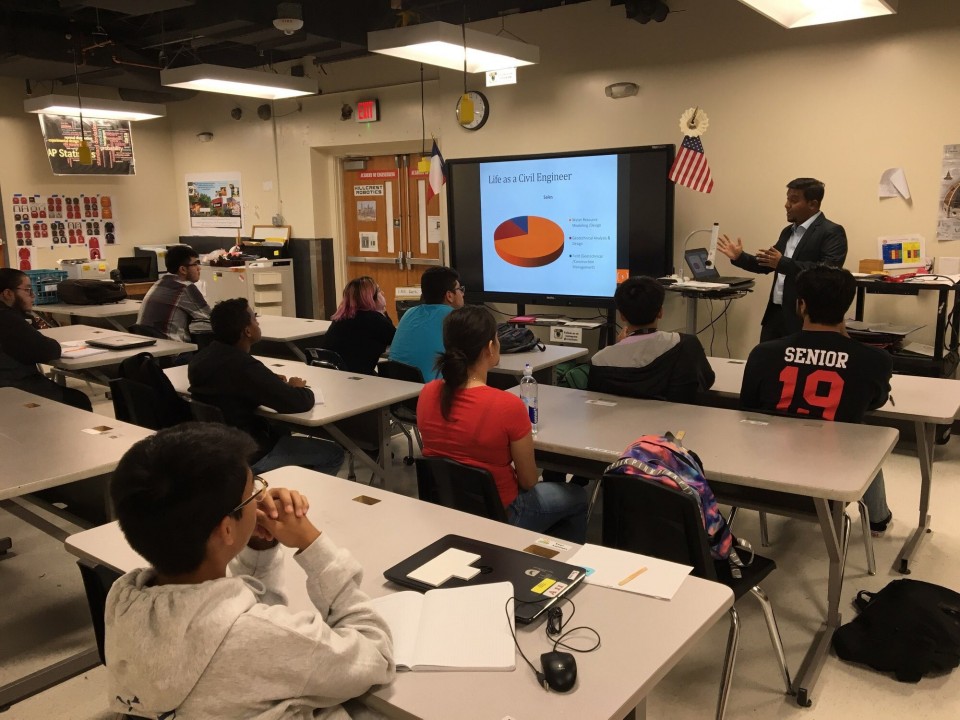
Rifat Alam, P.E., a water resources civil engineer at AECOM spoke about his background and how he became a civil engineer. He explained his role at AECOM, and how his career path eventually led him to become a water resources engineer. He gave an overview of water resources engineering including some very basic design concepts. He also shared some of his current work with various dams and reservoirs around the Dallas-Ft. Worth area that involves lots of hydraulics and hydrology modeling.
Next, Rifat discussed flooding with the students – the causes of flooding, recent flooding events, and a civil engineer’s role in flooding. He gave an overview of 2D floor modeling including “waffle” theory. Finally, he led a brainstorming session for the students. He challenged the students to debate what engineering options they would choose to address an urban flooding incident (interior drainage improvement, channel improvement, pumping, etc.) and rank them from best to worst.
Materials Engineering with Wiss, Janney, Elstner Associates
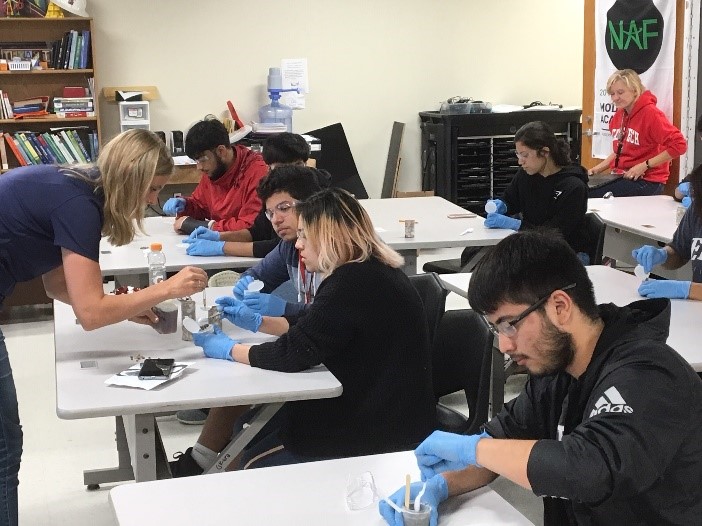
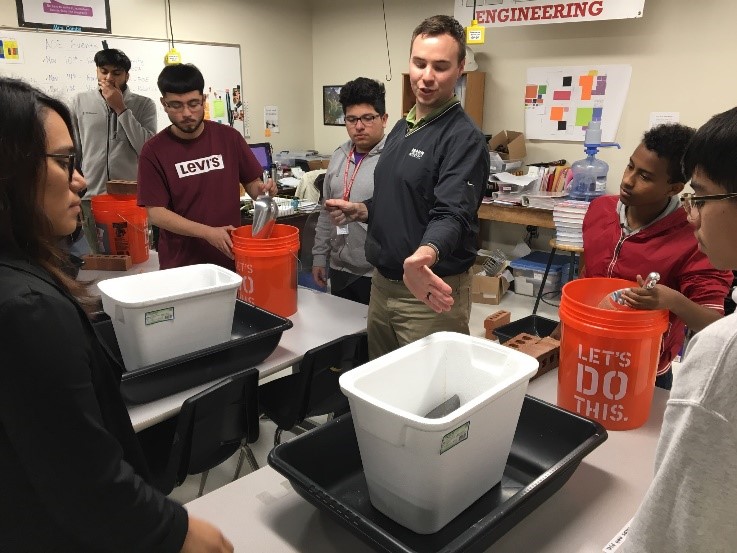
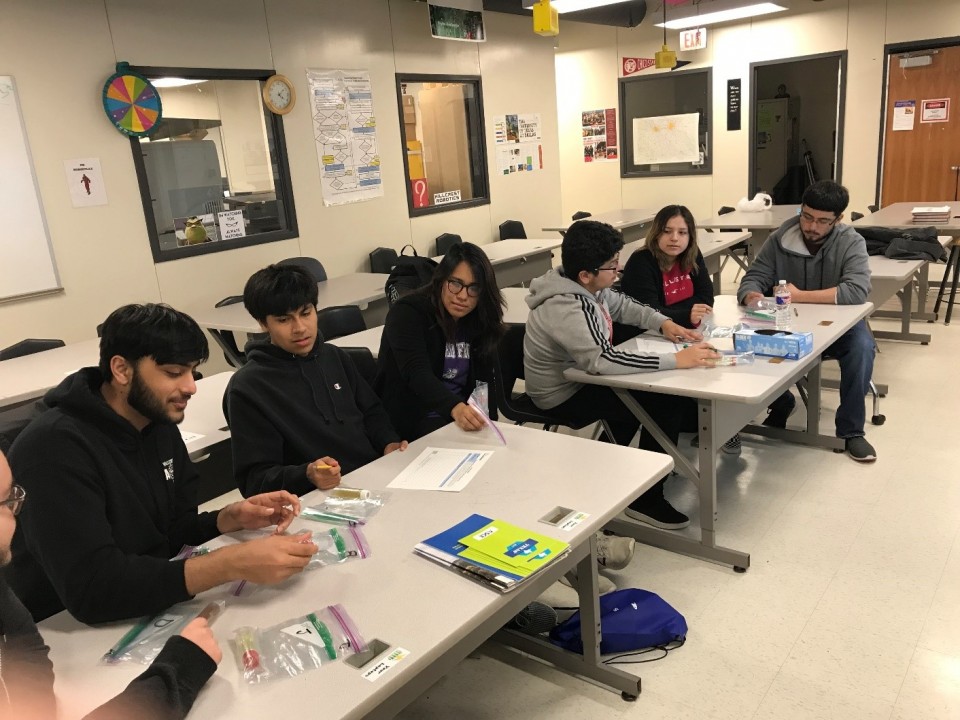
Kaitlin Forke and Doug Smith of WJE presented to the Hillcrest High School CE Club. With their extensive background in materials engineering, they gave a brief overview of concrete including the basic constituents (with specific focus on Portland cement and chemical admixtures), the batching process, and field placement and testing. The presentation included an activity that highlighted the effects of chemical admixtures, specifically super plasticizers and viscosity modifying admixtures (VMAs), on the rheology of a concrete mix. During the activity, each student mixed Portland cement and water in a small container. After seeing how difficult it was to mix just the cement and water, they added a few drops of super plasticizer and were able to see a drastic improvement in workability. However, when they placed a few aggregates in the mix (small pebbles), all the aggregate sank to the bottom. Next, they added a few drops of VMA to their mixes and didn’t see any drastic changes in workability. However, when they placed aggregates in the mix, the aggregate stayed on top initially and could be evenly distributed by mixing. It was a great hands-on activity for the Hillcrest students that effectively and practically demonstrated the principles of concrete mix design!

Water Resources Engineering with Kimley-Horn
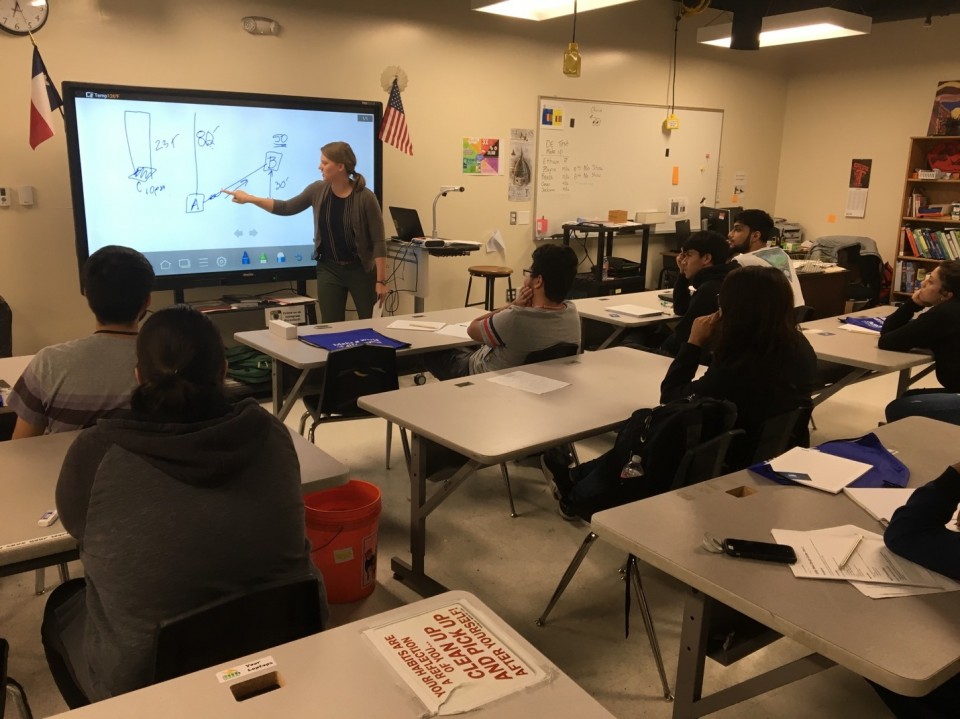
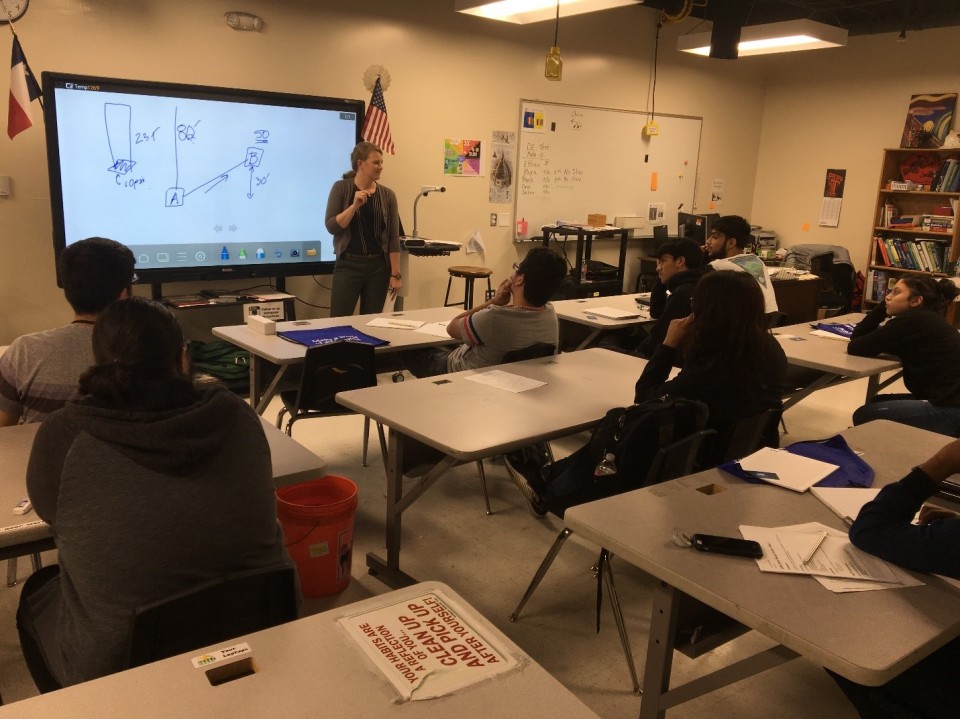
Ashlyn Morgan of Kimley-Horn presented on water and wastewater infrastructure engineering. She touched on all aspects of her day to day work, including pipe rehabilitation, new construction, modeling, and master planning. After this quick overview, Ashlyn put the students to work right away with a great group activity. For the activity, Ashlyn created a map of an imaginary town called “Agloe”. The map identified the water delivery point and then a proposed development about a mile away that needed a certain amount of water. The goal of the activity was to find the least expensive combination of pumps and pipe sizes to deliver water to the new development. The students learned about pump curves, head loss, and system curves to figure out which pipes and pumps could work to deliver water. Each team came up with what they believed to be the best solution, and then the entire class shared their unique results.
Field Engineering and Technical Marketing with Hilti
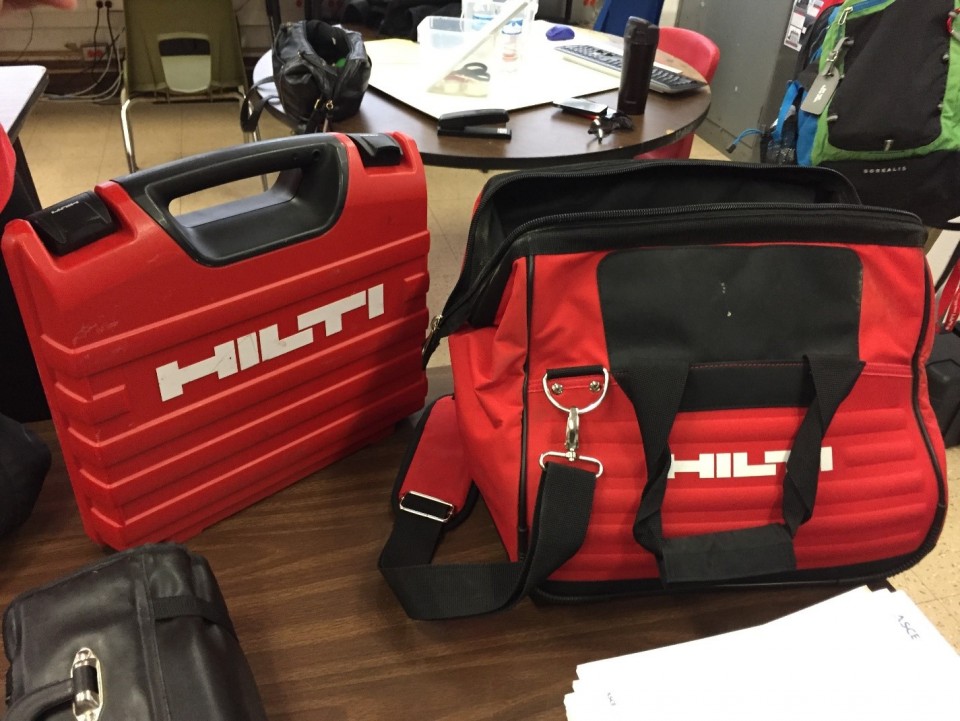
Alexis Clark of Hilti spoke to the Hillcrest High School CE Club about her career arc through field engineering and now in technical marketing. From her experience as a field engineer, she let the students know that not all engineers work from an office and do calculations and design in what most would call a "traditional" setting. She also reminded the students that engineering doesn’t have to be your only passion – you can incorporate a passion of language, art, competition, travel, etc. into your pursuit of a career in engineering!
Alexis walked the students through the history of Hilti and some of her daily tasks as a field engineer and technical marketer. She then gave the students a hands-on exercise to design appropriate anchorage of a column base plate to concrete using different anchor types. The students had to design with all anchor types and make an argument for one of the anchor types based on strength, overall cost, ease of installation and other parameters that professional engineers must take into consideration in their designs every day.
Land Development with Foresite Group
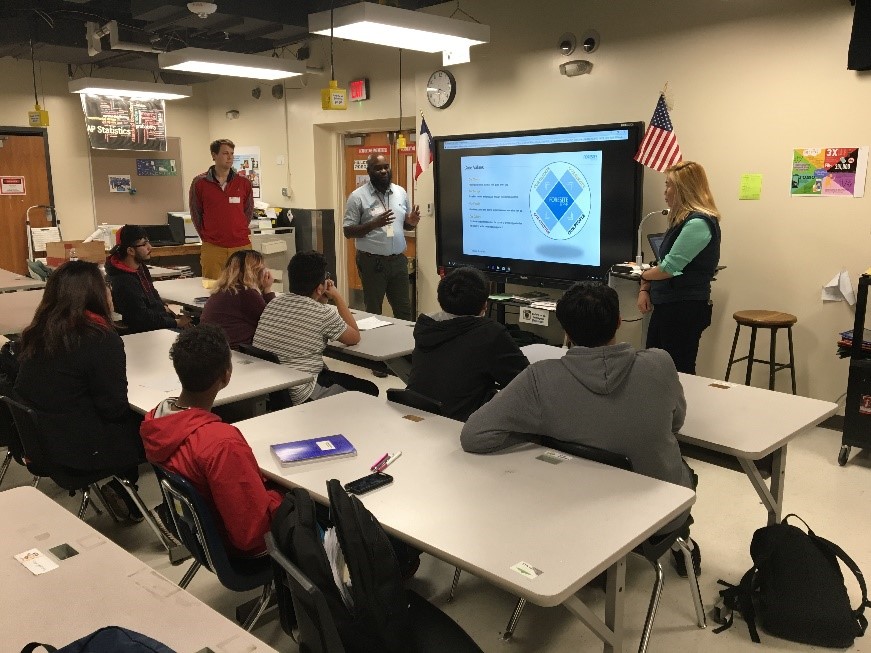
Julia Dang, Patrick Annett and Kyle Depperman of Foresite Group, a loyal partner to the CE Club Program in Dallas, led their now famous land development activity with the Hillcrest High School students. This great group activity illustrates to the high school students how land development teams must work together to achieve an under-budget, efficient, profitable, and welcoming community. Each student was given a specific role to personify on a development team:
- Developer– interested in getting the most return on investment
- Home Owner’s Association Chair– concerned with the long-term residents of the community and the impact the development will have on property values, quality of life, and comfort
- City Planner– concerned about boosting the city’s economy while also meeting the community needs
- City Economic Developer– interested in the revenue the new development will generate and the jobs that will be created
- Mayor– up for re-election and interested in making the community members as happy as possible; gives the final approval of the layout
Students were given a site plan with four blank city blocks that was bordered by a neighborhood, a major highway, and commercial development. They were given a budget and a list of possible buildings and spaces that could fill up these four blocks, along with a cost associated with each building or space. Students then had to assume their roles within the development team to decide where and how many grocery stores, houses, apartment complexes, strips malls, pharmacies, parks, homeless shelters, schools, and community centers would be placed on the site plan. Students quickly realized the importance of patience and communication when each team member has a different agenda for the development. Each group then had to present their new development to the whole class while justifying the decisions they had made. The Foresite Group engineers then offered constructive feedback of each team’s development.
Traffic Engineering with Urban Engineers Group
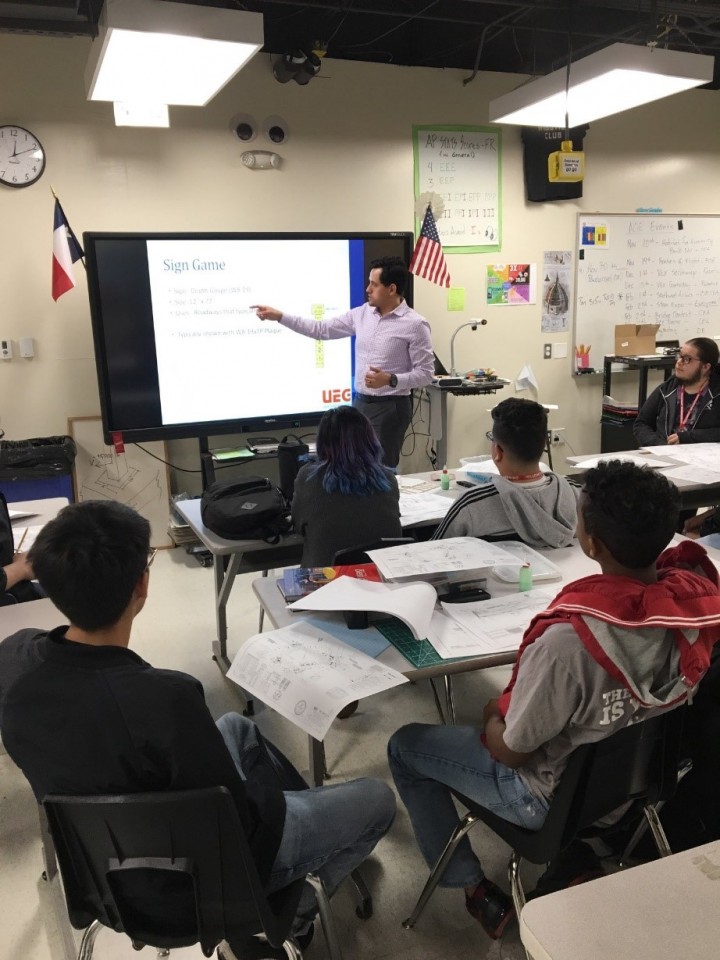
Omar Venzor of Urban Engineers Group talked with the CE Club students about traffic engineering. He outlined what it takes to become a traffic engineer, including the licensing requirements. Students were also shown that they could work for either public organizations such as cities, counties, airports, and TxDOT or private corporations that do consulting work.
Next, Omar explained the types of projects that traffic engineers work on. The students were shown the reports that are produced from traffic studies that determine the existing conditions and capacity at a location, as well as future analysis to determine what improvements should be made to achieve a prescribed level of service. They also discussed signal timing, signing, and pavement marking design, ITS design, and roadway illumination. The students got to review a traffic signal plan set for a signal that has already been built.
Geotechnical Engineering with Braun Intertec
Reece Taylor of Braun Intertec spoke to the Hillcrest High School CE club about his area of expertise: geotechnical engineering. He presented a couple of the oldest, known, man-made structures and described how earth materials were used to construct them. Reece also discussed what a geotechnical engineer often does on a day-to-day basis and his or her role in the overall project. This day-to-day activity includes preparing subsurface exploration programs using geologic resources and experience, collecting samples of earth materials, performing laboratory analysis to determine the relevant physical/mechanical and chemical properties of these materials, and using these results to prepare and submit design recommendations to the project design team.
Reece highlighted types of projects geotechnical engineers get the opportunity to work on throughout their career and shared his personal experience with geotechnical challenges. Reece also shared that engineering doesn’t just require math and science skills. An engineer often uses several other skill sets. In practice, excellent verbal and written communication and project management can differentiate an individual from his or her peers.
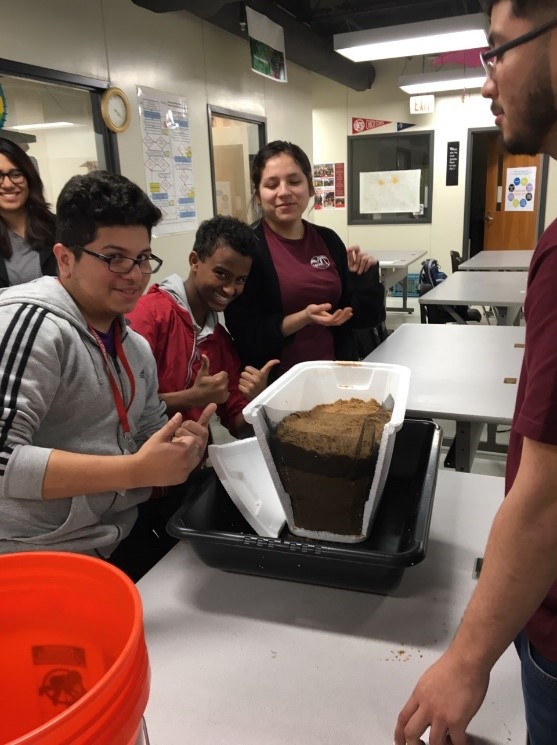
Finally, he led a hands-on activity that required consideration of geotechnical engineering principles. The students learned a few principals/behaviors of earth materials to consider (e.g. friction angle/angle of repose) and how engineers can use other man-made materials, such as geogrid, to control modes of failure. By using composite, earth structures, engineers can reduce the amount of material used to construct a retaining wall or embankment, thus often resulting in savings to the project. Using this information, three groups of students attempted to construct a mechanically-stabilized retaining wall using only sand and window screen (geofabric)!
Environmental Engineering with LCA Environmental
Mark Boyd of LCA Environmental, and the current ASCE Dallas Branch Past-President, spoke to the CE Club students at Hillcrest High School about water resources and environmental engineering. The discussion started off with a run through the water cycle, including evaporation, condensation, precipitation, groundwater, surface water, and surface run off. Mark then had the students consider surface run off specifically. They were asked to list off what could be contained in surface run off and how do engineers need to handle and treat that water.
Mark then had a great group activity for the students to perform an improptu water quality risk assessment. The classroom was split up into teams, and each team had to evaluate the purity of ten different water samples with varying levels of contamination. Some samples had obvious bits of dirt, particles, and oil floating in them, while others appeared to be perfectly clear and “clean”. The students were tasked with ranking the ten samples in order of their own concept of “cleanliness”. Afterwards, Mark would reveal to the students the true ranking of the samples based on mandated requirements for drinking water.
Engineers Without Borders
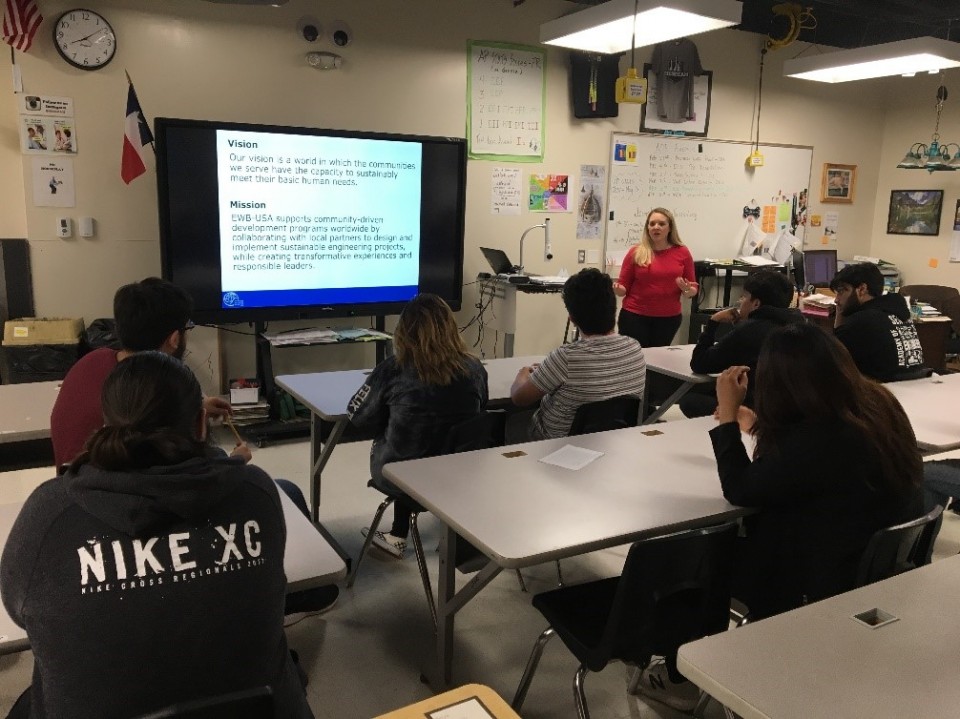
Julie Jones of Nathan D. Maier Consulting Engineers took time to talk about the impact she is making outside of her office job as a volunteer for Engineers Without Borders. She hoped to inspire the students to use their engineering skills to improve the world while also expanding their perspective on the world by traveling to other parts of the world that have much greater needs than those in our country. Julie began by giving the students an overview of the EWB mission, vision, and project types. She then went into deeper detail about a recent project she has been working on in the community of Culli Culli Alto, Bolivia. She described all the information her team gathered during an assessment trip to see how EWB could best serve the community. The community was in dire need of clean drinking water after the local well broke down. They worked to determine what went wrong with the current well and what could have been done to prevent in failure. Options for a water system were developed and analyzed, and the construction of a final design will be completed in the fall.
She also explained to the students that a sustainable project is needed so that the locals can maintain and fix the system with local materials and knowledge. Towards the end of the presentation she challenged the students to come up with their own ideas for how they would collect data from the local community and how they would design and phase a sustainable project that meets the needs of the community.